Artificial Intelligence (AI) has advanced significantly since its inception, revolutionizing industries through machine learning, automation, and data analytics. In criminal justice, AI enhances crime prevention and investigation by leveraging predictive analytics, biometrics, and digital forensics. In the Philippines, AI-driven surveillance and forensic tools offer solutions for tackling cybercrime, organized crimes, and terrorism, aiding law enforcement in identifying crime patterns and improving response times. However, challenges such as data privacy, algorithmic bias, and ethical concerns must be addressed to ensure fairness and accountability. This study explores AI’s feasibility in Philippine law enforcement, assessing its benefits, limitations, and societal impact to promote responsible implementation for a more efficient and secure justice system. Through a Google Form’s Survey, it was found by the researchers that people do not trust the abilities of AI to do its job and be able to do it effectively and accurately. Specifically, it is believed that human intervention is needed when it comes to law enforcement. However, AI is a great helper in managing minor tasks more time-efficient. If it would be used, it is recommended by the researchers to have the people that will use this technology to learn how to manage this technology wisely and very carefully, applying one’s own skills and knowledge to do work with it instead of purely relying on the AI to do all the tasks.
This is an Open Access article, distributed under the terms of the Creative Commons Attribution 4.0 International License (http://creativecommons.org/licenses/by/4.0/), which permits unrestricted use, distribution and reproduction in any medium or format, provided the original work is properly cited.
Artificial Intelligence is the technology where machines try to simulate human learning, comprehension, problem solving, decision making, creativity, and autonomy. Artificial Intelligence first emerged from 1950, making AI at least 70 years old. With new innovations regarding AI, there are a lot of instances where it evolved. The ability of AI to learn from historical data is called Machine Learning. This was first introduced in the 1980’s and branched out to different types such as linear regression, logistic regression, decision trees, random forest, and such
[1]
Stryker, Cole, and Eda Kavlakoglu. What Is Artificial Intelligence (AI)? 14 Feb. 2025,
. One of the most popular machine learning algorithm is Linear Regression, as it is simpler to understand interpret compared to other algorithms.
Artificial Intelligence offers a lot of benefits not only for daily life, but also for industries and companies. Some of the benefits include automation of repetitive tasks, more and faster insight on information, enhanced decision making, fewer human errors, accessible at any time, and reduced physical risks. While there are benefits, there are also disadvantages in using Artificial Intelligence
[2]
Duggal, Nikita. ‘Advantages and Disadvantages of AI’. Simplilearn, 25 Feb. 2021,
. AI lacks the ability to be creative as humans do due to it referring to old and historical data and being a machine. Another limitation AI has is the lack of emotional intelligence that it has compared to a human that takes the emotional aspect into consideration when doing decision making.
Machine Learning is a subcategory of Artificial Intelligence that uses algorithms in order to learn insights and recognize patterns from data
[3]
Columbia Engineering. ‘Artificial Intelligence (AI) vs. Machine Learning’. CU-CAI, 11 May 2021,
. This is one of the reasons that make Artificial Intelligence a powerful tool. Make no mistake, these two are different from each other. Machine Learning is a subpart of Artificial Intelligence.
Artificial Intelligence also has ethical implications when it comes to using AI in businesses, industries, and academics. Artificial Intelligence is usually looked down upon in generative AI art and in academics. Being said that AI does the work and not the student or artist themselves. Big companies are opting to use generative AI art instead of the human-made art and leaving them with no jobs. Some other ethical implications are privacy, transparency, and governance
[4]
Yen, Rachel. ‘The Implications of AI for Criminal Justice’. My WordPress, 7 Oct. 2024,
Bharati, Rahul Kailas. ‘Ethical Implications of AI in Criminal Justice: Balancing Efficiency and Due Process’. RESEARCH REVIEW International Journal of Multidisciplinary, vol. 9, no. 7, Research Review Publisher, July 2024, pp. 93–105,
. Artificial Intelligence could still be manipulated and be misused by bad actors within the scene.
1.2. AI in Crime Prevention and Investigation in the Philippines
Rising as a transforming tool in criminal justice, artificial intelligence (AI) provides creative ideas to improve crime prediction, surveillance, and forensic investigations. This paper investigates how artificial intelligence technologies—including machine learning, predictive analytics, and biometrics—detect, stop, and battle transnational crimes such as cybercrime, human trafficking, and terrorism, thus supporting law enforcement
[8]
Jejelola, Folajimi. ‘The Role of Artificial Intelligence in the Eradication of Transnational Crime’. International Journal of Research and Innovation in Social Science, 4 Dec. 2024,
. AI-driven solutions intend to increase public safety and simplify investigative procedures in the Philippines, where law enforcement and crime prevention confront many difficulties.
Examining 120 research articles from 2008 to 2021 on AI-driven crime prediction found 34 crime categories, 23 crime analysis approaches, and 64 machine learning (ML) strategies
[7]
Dakalbab, Fatima, et al. ‘Artificial Intelligence & Crime Prediction: A Systematic Literature Review’. Social Sciences & Humanities Open, vol. 6, no. 1, Elsevier BV, 2022, p. 100342,
. Their research turned up supervised learning as the most often employed method. Utilizing sophisticated data analytics, machine learning algorithms, and predictive modeling, artificial intelligence (AI) can help law enforcement authorities forecast criminal activity, allocate resources effectively, and apply proactive crime prevention initiatives. Authorities may find criminal hotspots, examine behavioral patterns, and create more successful law enforcement interventions by using AI's ability to process enormous volumes of data in real-time.
Surveillance systems including artificial intelligence have transformed monitoring and criminal identification. Public space security measures are improved by technologies including facial recognition, object detection, and behavior analysis, thereby lowering human limits in monitoring vast regions. In the Philippine setting, where organized crime and urban crime still abound, AI-driven monitoring might help law enforcement spot possible hazards, enhance response times, and give real-time alarms. The National Crime Records Bureau (NCRB) reports that under violent crimes in 2022 there were 28,522 murder cases overall as well as 107,588 cases of kidnapping and abduction registered. Furthermore, the crime rate per 100,000 women and children was 66.4 and 36.6 respectively
[9]
Kaur, Manpreet, and Munish Saini. ‘Role of Artificial Intelligence in the Crime Prediction and Pattern Analysis Studies Published over the Last Decade: A Scientometric Analysis’. Artificial Intelligence Review, vol. 57, no. 8, Springer Science and Business Media LLC, July 2024,
. Furthermore, AI-powered digital forensics can speed up evidence analysis so that forensic investigators may more quickly solve crimes. Using artificial intelligence in forensic investigations improves accuracy in voice analysis, fingerprint recognition, and cybercrime detection, therefore strengthening case resolutions.
Including artificial intelligence in the Philippine criminal justice system offers a hopeful change toward a more open, data-driven, efficient method of crime prevention and investigation. Although artificial intelligence has major benefits, ethical issues including data privacy, algorithmic prejudice, and the need for human supervision have to be properly resolved. Implementing responsible artificial intelligence calls for carefully defined laws, rules, and cooperation among government agencies and technological professionals. As artificial intelligence develops, its acceptance in criminal justice can help to create a society more safe and secure, therefore supporting the rule of law in the Philippines.
1.3. Objectives and Scope of the Study
Using Artificial Intelligence to help in investigations and solve crimes has been prevalent in recent years throughout different countries. The Philippines, on the other hand, has been preparing to utilize it in its systems. It has been used for other fields like the Education department; as it is present when creating illustrations or utilized when creating scripts for a speech. However, there exists a literature gap in the number of studies detailing the possible implications, challenges, and opportunities of AI when it comes to using it for law enforcement. As such, the study aims to fill this void in knowledge by discussing the feasibility of using AI in the Philippines’ justice system.
The researchers would examine the effectiveness of AI in preventing crime from happening through surveillance and data analysis to lessen the number of unfortunate occurrences. An AI having accurate crime prediction abilities could enhance investigators when handling potential suspects, therefore reducing the number of future victims. It could also help ensure fairness when implementing regulations because of its objectivity; therefore preventing corruption or extortion through moral manipulation. The effectiveness of a digital robot’s help in analyzing pieces of evidence and crimes accurately would also be assessed to determine if AI is reliable and valid, therefore measuring its accountability for the information it gives. In addition, challenges such as AI hallucinations and ethical implications would also be identified by the researchers as a way to procure solutions and make adjustments based on these limitations. This would be done through a survey that determines the perception of people in the Philippines on the use of AI for criminal investigations. This would help the researchers propose guidelines and suggestions for its implementation to become practical and applicable to the current justice system of the Philippines.
2. Literature Review
2.1. AI in Crime Analysis
Amidst ethical challenges and concerns, the effectiveness of artificial intelligence in criminal investigations should not be denied. A study from the National Institute of Justice (NIJ) detailed the convenience of using AI for minor tasks that are easy but time-consuming. A specific example included criminal profiling
[14]
Rigano, Christopher. “Using Artificial Intelligence to Address Criminal Justice Needs.” National Institute of Justice, January 2019,
, in which all details about suspects in past and present cases are listed properly and organized neatly to become readily available once needed again in a virtual space. Human errors such as losing files and putting a wrong profile into a folder case for various reasons are mitigated drastically as a result. However, in addition to becoming a smaller assistant, like all AI technologies recently, it had the capability to do something more. This is why it is still being trained aggressively for it to become more accurate in doing various, much more tasking jobs; such as crime forecasting, video & audio assessment, and biological data analysis. Going as far as doing a partial job of being a detective–reconstructing what happened during a crime.
Presently, a machine that underwent semi-supervised up to supervised training for a specialized purpose could be accurate. An example is analyzing handwritten notes and knowing the owner of the said note
[10]
Del Mar-Raave, Joanna Rose, et al. ‘A Machine Learning-Based Forensic Tool for Image Classification - A Design Science Approach’. Forensic Science International: Digital Investigation, vol. 38, no. 301265, Elsevier BV, Sept. 2021, p. 301265,
. Its usefulness varies drastically depending on what the note entails and how it relates to the crime that occurred. Another example is the “high accuracy” of detecting how the shoe size would have been given it left a track at a crime scene
[11]
Hoon, Yeo, et al. Critical review of machine learning approaches to apply big data analytics in DDoS forensics. (2018, January 1). IEEE Conference Publication | IEEE Xplore.
, becoming highly useful in determining the biological feature of a witness or culprit. A third task that AI should aim to be better at is the ability to effectively reconstruct a crime scene given its aftermath. This requires actual reasoning ability and purposeful observation of a given location to make valid conclusions and results. As of now, the most reliable use of AI in relation to this purpose is present on machines being used to analyze marks and pieces of evidence that, after enough time, would help detectives and investigators in their deductions
[17]
Yeow, Wei Liang, et al. ‘An Application of Case-Based Reasoning with Machine Learning for Forensic Autopsy’. Expert Systems with Applications, vol. 41, no. 7, Elsevier BV, June 2014, pp. 3497–3505,
Generally speaking, AI is already great at handling either organizational tasks or repeating jobs with elements that are found everywhere and already exist. For example, analyzing a person’s image to match up with a name much faster could be done using AI repeatedly and reliably and with minimal mistakes over time unlike humans
[14]
Rigano, Christopher. “Using Artificial Intelligence to Address Criminal Justice Needs.” National Institute of Justice, January 2019,
. However, AI occasionally struggles to become accurate for sequential data that didn’t already exist as it can still have the tendency to hallucinate. For example, in video analysis, a blurry person’s face and an object’s low-quality appearance could be part of a dataset that a machine could recognize and automatically make an entire picture much clearer as a result. That being said, it can only help investigations become faster instead of stagnating due to it being full of challenges. AI-altered evidence cannot become entirely conclusive due to AI hallucinations. In addition, there still exists the ethical viewpoint of what if, a malicious entity had swooped in and made the AI generate false evidence. Some of the ethical considerations for artificial intelligence in criminal justice are bias and fairness, and data privacy concerns
[15]
Frenkel, Omer. ‘AI and Crime: How Artificial Intelligence Is Advancing Crime Prevention’. Cognyte, 30 Jan. 2025,
. Biased data for training the artificial intelligence may skew the AI into being biased and lead to an incorrect decision.
Sequential data is generated based on the past and present data. Due to its reliability becoming questioned, types of neural networks are focused on predicting reliable results more than ever. One technique called Recurrent Neural Network (RNN) is effective at predicting future events
[13]
Mienye, I. D., Swart, T. G., & Obaido, G. (2024). Recurrent Neural Networks: A comprehensive review of architectures, variants, and applications. Information, 15(9), 517.
. For officers working in fields regarding public safety, the inherent capability of predicting a crime, and becoming able to stop it before it occurs is a crucial and important ability to have. Various models such as the “random forest model” are being used for this purpose. This is where each “tree” in the “forest” handles a large set of data. As an attempt of a researcher to relate it in the sense of criminal investigations, a tree could include past investigations of crimes and how these crimes came to be. It what motives were involved, what tools were used, when did it happen, who were the suspects, etc. are all included in a singular tree. Similar and differing cases are then in the other trees to form the entire forest. Now, when a case might occur, the AI uses its “trees of knowledge” to form a conclusion on whether or not a case could occur. As a result, it is very useful in predicting crimes
[7]
Dakalbab, Fatima, et al. ‘Artificial Intelligence & Crime Prediction: A Systematic Literature Review’. Social Sciences & Humanities Open, vol. 6, no. 1, Elsevier BV, 2022, p. 100342,
. Its main limitations are the time and enormous resources it uses due to the amount of data it processes before making a result.
Its reliability overall as a standalone machine for all types of investigative tasks, however, is still questionable at best. Problems regarding the AI’s memory, coding, or computational power hinder its capability to do these tasks accurately and consistently. To perform well, it is imperative that humans continue to input data, training it to efficiently utilize past data while preparing to solve future challenges to reduce the usual problem associated with AI, its limited capacity.
2.2. AI in Philippine Criminal Justice
Rising as a transforming tool in criminal justice, artificial intelligence (AI) provides creative ideas to improve crime prediction, surveillance, and forensic investigations. This paper investigates how artificial intelligence technologies—including machine learning, predictive analytics, and biometrics—detect, stop, and battle transnational crimes such as cybercrime, human trafficking, and terrorism, thus supporting law enforcement
[8]
Jejelola, Folajimi. ‘The Role of Artificial Intelligence in the Eradication of Transnational Crime’. International Journal of Research and Innovation in Social Science, 4 Dec. 2024,
. AI-driven solutions intend to increase public safety and simplify investigative procedures in the Philippines, where law enforcement and crime prevention confront many difficulties. The Philippines is starting to look at using Artificial Intelligence to improve operations
[16]
Lim, Francis. ‘[Point of Law] Artificial Intelligence for Our Court System’. Rappler, 11 July 2024,
. This would, ideally, hasten the court process and lessen the piled up court hearings.
Examining 120 research articles from 2008 to 2021 on AI-driven crime prediction found 34 crime categories, 23 crime analysis approaches, and 64 machine learning (ML) strategies
[7]
Dakalbab, Fatima, et al. ‘Artificial Intelligence & Crime Prediction: A Systematic Literature Review’. Social Sciences & Humanities Open, vol. 6, no. 1, Elsevier BV, 2022, p. 100342,
. Their research turned up supervised learning as the most often employed method. Utilizing sophisticated data analytics, machine learning algorithms, and predictive modeling, artificial intelligence (AI) can help law enforcement authorities forecast criminal activity, allocate resources effectively, and apply proactive crime prevention initiatives. Authorities may find criminal hotspots, examine behavioral patterns, and create more successful law enforcement interventions by using AI's ability to process enormous volumes of data in real time.
Surveillance systems including artificial intelligence have transformed monitoring and criminal identification. Public space security measures are improved by technologies including facial recognition, object detection, and behavior analysis, thereby lowering human limits in monitoring vast regions. In the Philippine setting, where organized crime and urban crime still abound, AI-driven monitoring might help law enforcement spot possible hazards, enhance response times, and give real-time alarms. The National Crime Records Bureau (NCRB) reports that under violent crimes in 2022 there were 28,522 murder cases overall as well as 107,588 cases of kidnapping and abduction registered. Furthermore, the crime rate per 100,000 women and children was 66.4 and 36.6 respectively
[9]
Kaur, Manpreet, and Munish Saini. ‘Role of Artificial Intelligence in the Crime Prediction and Pattern Analysis Studies Published over the Last Decade: A Scientometric Analysis’. Artificial Intelligence Review, vol. 57, no. 8, Springer Science and Business Media LLC, July 2024,
. Furthermore, AI-powered digital forensics can speed up evidence analysis so that forensic investigators may more quickly solve crimes. Using artificial intelligence in forensic investigations improves accuracy in voice analysis, fingerprint recognition, and cybercrime detection, therefore strengthening case resolutions.
Including artificial intelligence in the Philippine criminal justice system offers a hopeful change toward a more open, data-driven, efficient method of crime prevention and investigation. Although artificial intelligence has major benefits, ethical issues including data privacy, algorithmic prejudice, and the need for human supervision have to be properly resolved. Implementing responsible artificial intelligence calls for carefully defined laws, rules, and cooperation among government agencies and technological professionals. As artificial intelligence develops, its acceptance in criminal justice can help to create a society more safe and secure, therefore supporting the rule of law in the Philippines.
3. Results and Discussion
In this study, a survey was conducted via Google Forms to assess public perception in the Philippines regarding the use of AI in criminal justice, specifically in crime prediction, surveillance, and forensic investigations with the use of a five-point Likert scale. The survey included multiple-choice, Likert scale, and linear scale questions, covering demographic details such as name, age, sex, and employment sector. Additionally, respondents were asked about their familiarity with artificial intelligence and their awareness of AI-driven tools used in criminal justice applications.
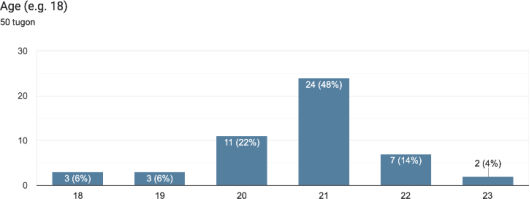
From a survey of 50 respondents, nearly half (48%) are 21 years old, making them the dominant age group. Those aged 20 follow at 22%, while 22-year-olds represent 14%. Smaller groups include 18- and 19-year-olds (6% each) and 23-year-olds (4%), highlighting a predominantly early-20s demographic.
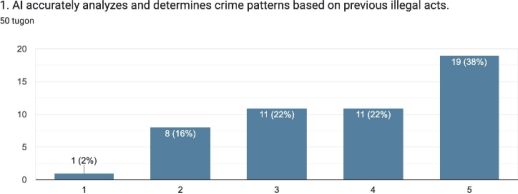
The survey results indicate that a majority of respondents (38%) strongly agree (5) with the statement that AI accurately analyzes and determines crime patterns, while 22% agree (4). Meanwhile, 22% are neutral (3), 16% disagree (2), and only 2% strongly disagree (1). This suggests that most respondents lack confidence in AI’s crime prediction accuracy. According to
[18]
Quest, Lisa, et al. How AI Is Shaping the Future of Fraud Detection and Risk.
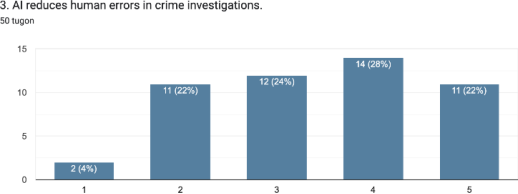
Figure 3. Perception of AI's Role in Reducing Human Errors in Crime Investigations.
The survey results show that opinions are mixed on whether AI reduces human errors in crime investigations. While 28% agree (4) and 22% strongly agree (5), a significant portion also disagrees (2 - 22%) or remains neutral (3 - 24%). Only 4% strongly disagree (1). This suggests skepticism about AI’s reliability in minimizing human errors. This may be due to some misinformation because according to inside AI news
[19]
Inside AI News. ‘How AI Helps Prevent Human Error in Data Analytics’. insideAI News, 18 Mar. 2023,
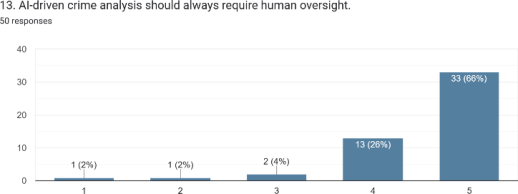
Figure 4. Perception of AI-driven crime analysis having a human overseer.
The survey results show that respondents thought that AI needs a human overseer in crime investigations. 33% of the respondents strongly agree, and 26% agree, while 4% are neutral and 2% both disagree and strongly disagree, respectively. According to
[20]
Sadulski, Jarrod. Artificial Intelligence in Crime Detection: How It’s Useful. American Military University (AMU), 12 June 2024,
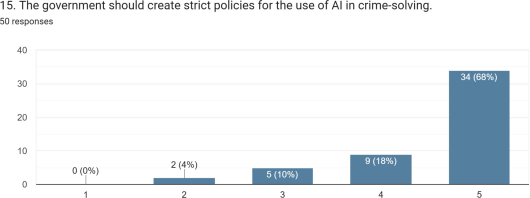
Figure 5. Perception of AI-driven crime analysis having a strict guideline when implemented.
Most respondents thought that AI needs a strict set of rules in order to implement AI. 68% of respondents strongly agree with this sentiment, and 18% agree. while 10% is neutral and 4% disagrees. With more than half of the respondents strongly agreeing, this suggests AI requires a strict set of rules before being implemented. According to
[22]
Santos, Jose. ‘Guidelines for the Safe and Ethical Implementation of AI in Prisons and Probation’. JUSTICE TRENDS Magazine - Exclusive Criminal Justice and Correctional Topics Worldwide, JUSTICE TRENDS Magazine, 18 Apr. 2023,
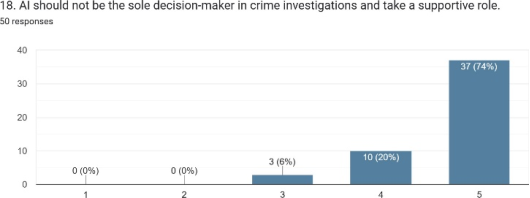
Figure 6. Perception of AI-driven crime analysis being a supportive role instead of the main actor.
As the chart suggests, most of the respondents think that AI is only a tool to help criminal investigations and should not have full power. Lawyers are apparently using AI as well as a supportive tool
[21]
Perrin, Benjamin. How AI Can Support—Not Undermine—Criminal Justice - Beyond., 15 Jan. 2025,
Interestingly, the topic with the most mixed reactions was focused on the AI’s accuracy to predict crimes. “Accuracy in Crime Prediction” observes people’s perception of how accurate AI can be in predicting crimes depending on the evidences and insights. Evidently, the respondents are mixed when it comes to their opinions regarding how AI can do crime prediction. Specifically, the majority of respondents still believe that AI can do this feature, but a number of the minority also believe otherwise. A number of respondents trust AI to predict crime patterns, increase efficiency in law enforcement, reduce human error, and even provide reliable insights for crime predictions. Yet, there is still a mixed reception of the effect of AI on human errors, specifically on the aspect of reducing human errors; as there could be biases
[23]
Cimphony. AI Predictive Policing Accuracy: 2024 Analysis.
. Although the majority still agree on this, the minority that believes otherwise is close in number. This means people have a level of trust in this type of technology that has not yet exceeded a threshold to become the norm in this society. This belief is further enforced when the majority of respondents thoroughly believe that human consideration should always intervene with the decisions of an AI assistant. It is imperative to make thorough rules and regulations for its implementation
The researchers conducted a survey to assess people’s perceptions of the use of AI in the criminal justice sector. Accordingly, it is observed that people have a mixed take when it comes to the level of trust they show in technology driven by AI. Especially speaking on the accuracy of crime prediction, wherein people do not have pure trust in the abilities of AI to predict crimes accurately and effectively. A considerable minority of respondents choose to prefer pure human intervention when it comes to law enforcement instead of using AI. This may be because of the multiple problems AI still exhibits since it is still at the early stage wherein it still needs to be trained to learn more nuances and have a smoother operation when used. On the flipside, the majority believe that AI can still have the capability to do these operations, but with a heavy emphasis on the need for human intervention in order to reduce concerns regarding the challenges and ethical implications when using AI in law enforcement.
Additionally, it is recommended to train not only the AI model, but also the officers to use this type of technology efficiently. This could be done through the coordination of AI experts and the government itself. This is because its core problems would only require power and resources to train it up to its full capabilities. This also means it would only be a matter of time before AI becomes a helper in various fields. However, there are features already present as of today. Specifically, its advantage of reducing time consumed for organizational tasks, or tasks minor in nature is a fact that should not be undermined and instead be used as an opportunity to make work more productive while also being convenient.
Abbreviations
AI
Artificial Intelligence
ML
Machine Learning
NCRB
National Crime Records Bureau
NIJ
National Institute of Justice
RNN
Recurrent Neural Network
Author Contributions
Raymond Bautista Sedilla: Supervision
Roland Thirdthe Valenzuela Pacheco: Data curation, Investigation, Methodology, Writing – original draft
Marcus Caesar Bolivar Tolentino: Conceptualization, Formal Analysis, Writing – original draft, Writing – review & editing
Marfan Jfour Pondivilla Baric: Data Curation, Formal Analysis, Methodology, Writing – original draft
Conflicts of Interest
The authors declare no conflicts of interest.
References
[1]
Stryker, Cole, and Eda Kavlakoglu. What Is Artificial Intelligence (AI)? 14 Feb. 2025,
Bharati, Rahul Kailas. ‘Ethical Implications of AI in Criminal Justice: Balancing Efficiency and Due Process’. RESEARCH REVIEW International Journal of Multidisciplinary, vol. 9, no. 7, Research Review Publisher, July 2024, pp. 93–105,
Jejelola, Folajimi. ‘The Role of Artificial Intelligence in the Eradication of Transnational Crime’. International Journal of Research and Innovation in Social Science, 4 Dec. 2024,
Kaur, Manpreet, and Munish Saini. ‘Role of Artificial Intelligence in the Crime Prediction and Pattern Analysis Studies Published over the Last Decade: A Scientometric Analysis’. Artificial Intelligence Review, vol. 57, no. 8, Springer Science and Business Media LLC, July 2024,
Del Mar-Raave, Joanna Rose, et al. ‘A Machine Learning-Based Forensic Tool for Image Classification - A Design Science Approach’. Forensic Science International: Digital Investigation, vol. 38, no. 301265, Elsevier BV, Sept. 2021, p. 301265,
Hoon, Yeo, et al. Critical review of machine learning approaches to apply big data analytics in DDoS forensics. (2018, January 1). IEEE Conference Publication | IEEE Xplore.
Mienye, I. D., Swart, T. G., & Obaido, G. (2024). Recurrent Neural Networks: A comprehensive review of architectures, variants, and applications. Information, 15(9), 517.
Yeow, Wei Liang, et al. ‘An Application of Case-Based Reasoning with Machine Learning for Forensic Autopsy’. Expert Systems with Applications, vol. 41, no. 7, Elsevier BV, June 2014, pp. 3497–3505,
Santos, Jose. ‘Guidelines for the Safe and Ethical Implementation of AI in Prisons and Probation’. JUSTICE TRENDS Magazine - Exclusive Criminal Justice and Correctional Topics Worldwide, JUSTICE TRENDS Magazine, 18 Apr. 2023,
Sedilla, R. B., Pacheco, R. T. V., Tolentino, M. C. B., Baric, M. J. P. (2026). AI in Criminal Justice: Enhancing Crime Prediction, Surveillance, and Forensic Investigations in the Philippines. International Journal of Law and Society, 9(2), 254-261. https://doi.org/10.11648/j.ijls.20260902.21
Sedilla, R. B.; Pacheco, R. T. V.; Tolentino, M. C. B.; Baric, M. J. P. AI in Criminal Justice: Enhancing Crime Prediction, Surveillance, and Forensic Investigations in the Philippines. Int. J. Law Soc.2026, 9(2), 254-261. doi: 10.11648/j.ijls.20260902.21
Sedilla RB, Pacheco RTV, Tolentino MCB, Baric MJP. AI in Criminal Justice: Enhancing Crime Prediction, Surveillance, and Forensic Investigations in the Philippines. Int J Law Soc. 2026;9(2):254-261. doi: 10.11648/j.ijls.20260902.21
@article{10.11648/j.ijls.20260902.21,
  author = {Raymond Bautista Sedilla and Roland Thirdthe Valenzuela Pacheco and Marcus Caesar Bolivar Tolentino and Marfan Jfour Pondivilla Baric},
  title = {AI in Criminal Justice: Enhancing Crime Prediction, Surveillance, and Forensic Investigations in the Philippines},
  journal = {International Journal of Law and Society},
  volume = {9},
  number = {2},
  pages = {254-261},
  doi = {10.11648/j.ijls.20260902.21},
  url = {https://doi.org/10.11648/j.ijls.20260902.21},
  eprint = {https://article.sciencepublishinggroup.com/pdf/10.11648.j.ijls.20260902.21},
  abstract = {Artificial Intelligence (AI) has advanced significantly since its inception, revolutionizing industries through machine learning, automation, and data analytics. In criminal justice, AI enhances crime prevention and investigation by leveraging predictive analytics, biometrics, and digital forensics. In the Philippines, AI-driven surveillance and forensic tools offer solutions for tackling cybercrime, organized crimes, and terrorism, aiding law enforcement in identifying crime patterns and improving response times. However, challenges such as data privacy, algorithmic bias, and ethical concerns must be addressed to ensure fairness and accountability. This study explores AI’s feasibility in Philippine law enforcement, assessing its benefits, limitations, and societal impact to promote responsible implementation for a more efficient and secure justice system. Through a Google Form’s Survey, it was found by the researchers that people do not trust the abilities of AI to do its job and be able to do it effectively and accurately. Specifically, it is believed that human intervention is needed when it comes to law enforcement. However, AI is a great helper in managing minor tasks more time-efficient. If it would be used, it is recommended by the researchers to have the people that will use this technology to learn how to manage this technology wisely and very carefully, applying one’s own skills and knowledge to do work with it instead of purely relying on the AI to do all the tasks.},
 year = {2026}
}
TY  - JOUR
T1  - AI in Criminal Justice: Enhancing Crime Prediction, Surveillance, and Forensic Investigations in the Philippines
AU  - Raymond Bautista Sedilla
AU  - Roland Thirdthe Valenzuela Pacheco
AU  - Marcus Caesar Bolivar Tolentino
AU  - Marfan Jfour Pondivilla Baric
Y1  - 2026/05/21
PY  - 2026
N1  - https://doi.org/10.11648/j.ijls.20260902.21
DO  - 10.11648/j.ijls.20260902.21
T2  - International Journal of Law and Society
JF  - International Journal of Law and Society
JO  - International Journal of Law and Society
SP  - 254
EP  - 261
PB  - Science Publishing Group
SN  - 2640-1908
UR  - https://doi.org/10.11648/j.ijls.20260902.21
AB  - Artificial Intelligence (AI) has advanced significantly since its inception, revolutionizing industries through machine learning, automation, and data analytics. In criminal justice, AI enhances crime prevention and investigation by leveraging predictive analytics, biometrics, and digital forensics. In the Philippines, AI-driven surveillance and forensic tools offer solutions for tackling cybercrime, organized crimes, and terrorism, aiding law enforcement in identifying crime patterns and improving response times. However, challenges such as data privacy, algorithmic bias, and ethical concerns must be addressed to ensure fairness and accountability. This study explores AI’s feasibility in Philippine law enforcement, assessing its benefits, limitations, and societal impact to promote responsible implementation for a more efficient and secure justice system. Through a Google Form’s Survey, it was found by the researchers that people do not trust the abilities of AI to do its job and be able to do it effectively and accurately. Specifically, it is believed that human intervention is needed when it comes to law enforcement. However, AI is a great helper in managing minor tasks more time-efficient. If it would be used, it is recommended by the researchers to have the people that will use this technology to learn how to manage this technology wisely and very carefully, applying one’s own skills and knowledge to do work with it instead of purely relying on the AI to do all the tasks.
VL  - 9
IS  - 2
ER  -
Sedilla, R. B., Pacheco, R. T. V., Tolentino, M. C. B., Baric, M. J. P. (2026). AI in Criminal Justice: Enhancing Crime Prediction, Surveillance, and Forensic Investigations in the Philippines. International Journal of Law and Society, 9(2), 254-261. https://doi.org/10.11648/j.ijls.20260902.21
Sedilla, R. B.; Pacheco, R. T. V.; Tolentino, M. C. B.; Baric, M. J. P. AI in Criminal Justice: Enhancing Crime Prediction, Surveillance, and Forensic Investigations in the Philippines. Int. J. Law Soc.2026, 9(2), 254-261. doi: 10.11648/j.ijls.20260902.21
Sedilla RB, Pacheco RTV, Tolentino MCB, Baric MJP. AI in Criminal Justice: Enhancing Crime Prediction, Surveillance, and Forensic Investigations in the Philippines. Int J Law Soc. 2026;9(2):254-261. doi: 10.11648/j.ijls.20260902.21
@article{10.11648/j.ijls.20260902.21,
  author = {Raymond Bautista Sedilla and Roland Thirdthe Valenzuela Pacheco and Marcus Caesar Bolivar Tolentino and Marfan Jfour Pondivilla Baric},
  title = {AI in Criminal Justice: Enhancing Crime Prediction, Surveillance, and Forensic Investigations in the Philippines},
  journal = {International Journal of Law and Society},
  volume = {9},
  number = {2},
  pages = {254-261},
  doi = {10.11648/j.ijls.20260902.21},
  url = {https://doi.org/10.11648/j.ijls.20260902.21},
  eprint = {https://article.sciencepublishinggroup.com/pdf/10.11648.j.ijls.20260902.21},
  abstract = {Artificial Intelligence (AI) has advanced significantly since its inception, revolutionizing industries through machine learning, automation, and data analytics. In criminal justice, AI enhances crime prevention and investigation by leveraging predictive analytics, biometrics, and digital forensics. In the Philippines, AI-driven surveillance and forensic tools offer solutions for tackling cybercrime, organized crimes, and terrorism, aiding law enforcement in identifying crime patterns and improving response times. However, challenges such as data privacy, algorithmic bias, and ethical concerns must be addressed to ensure fairness and accountability. This study explores AI’s feasibility in Philippine law enforcement, assessing its benefits, limitations, and societal impact to promote responsible implementation for a more efficient and secure justice system. Through a Google Form’s Survey, it was found by the researchers that people do not trust the abilities of AI to do its job and be able to do it effectively and accurately. Specifically, it is believed that human intervention is needed when it comes to law enforcement. However, AI is a great helper in managing minor tasks more time-efficient. If it would be used, it is recommended by the researchers to have the people that will use this technology to learn how to manage this technology wisely and very carefully, applying one’s own skills and knowledge to do work with it instead of purely relying on the AI to do all the tasks.},
 year = {2026}
}
TY  - JOUR
T1  - AI in Criminal Justice: Enhancing Crime Prediction, Surveillance, and Forensic Investigations in the Philippines
AU  - Raymond Bautista Sedilla
AU  - Roland Thirdthe Valenzuela Pacheco
AU  - Marcus Caesar Bolivar Tolentino
AU  - Marfan Jfour Pondivilla Baric
Y1  - 2026/05/21
PY  - 2026
N1  - https://doi.org/10.11648/j.ijls.20260902.21
DO  - 10.11648/j.ijls.20260902.21
T2  - International Journal of Law and Society
JF  - International Journal of Law and Society
JO  - International Journal of Law and Society
SP  - 254
EP  - 261
PB  - Science Publishing Group
SN  - 2640-1908
UR  - https://doi.org/10.11648/j.ijls.20260902.21
AB  - Artificial Intelligence (AI) has advanced significantly since its inception, revolutionizing industries through machine learning, automation, and data analytics. In criminal justice, AI enhances crime prevention and investigation by leveraging predictive analytics, biometrics, and digital forensics. In the Philippines, AI-driven surveillance and forensic tools offer solutions for tackling cybercrime, organized crimes, and terrorism, aiding law enforcement in identifying crime patterns and improving response times. However, challenges such as data privacy, algorithmic bias, and ethical concerns must be addressed to ensure fairness and accountability. This study explores AI’s feasibility in Philippine law enforcement, assessing its benefits, limitations, and societal impact to promote responsible implementation for a more efficient and secure justice system. Through a Google Form’s Survey, it was found by the researchers that people do not trust the abilities of AI to do its job and be able to do it effectively and accurately. Specifically, it is believed that human intervention is needed when it comes to law enforcement. However, AI is a great helper in managing minor tasks more time-efficient. If it would be used, it is recommended by the researchers to have the people that will use this technology to learn how to manage this technology wisely and very carefully, applying one’s own skills and knowledge to do work with it instead of purely relying on the AI to do all the tasks.
VL  - 9
IS  - 2
ER  -




 Share This Article
 Twitter
 Linked In
 Facebook
 Copy
Copy Download